ABOUTThe Camden Great Fire
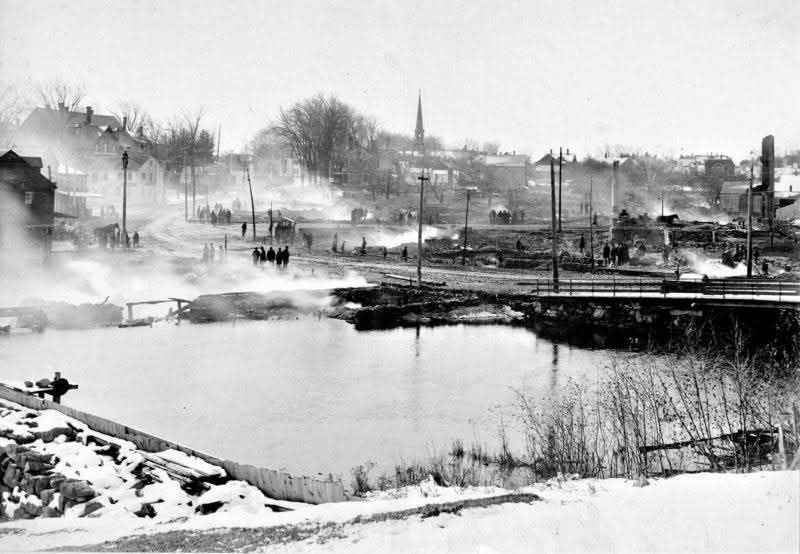
“At one thirty the morning of November 10, 1892, a fire alarm sounded which brought most of the Camden residents from their beds to witness a frightful sight.”
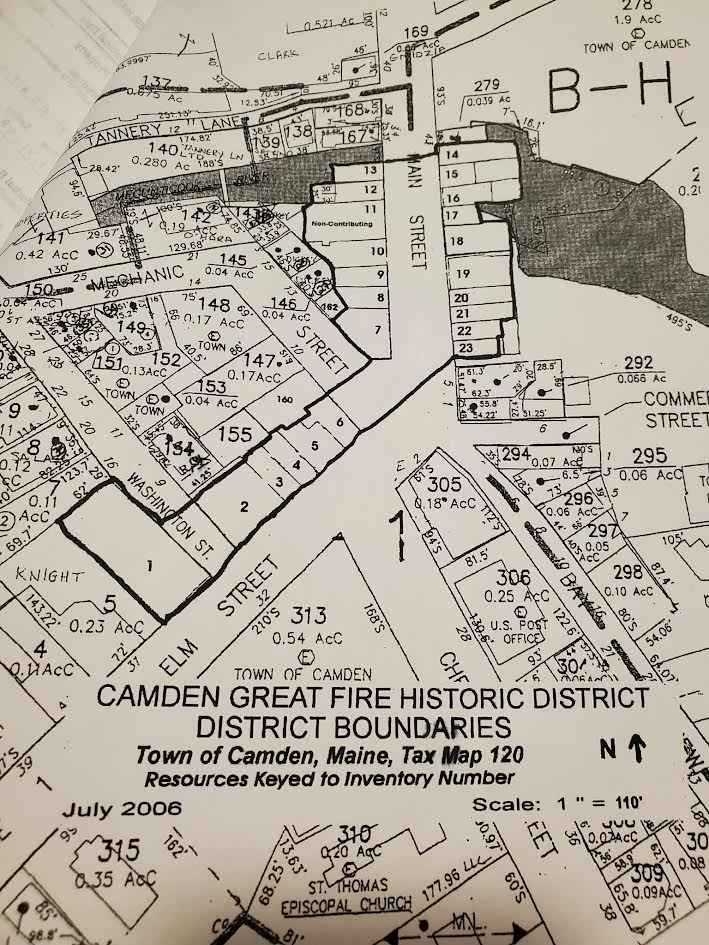
So begins the gripping tale of Camden’s Great Fire, as recounted in the vivid, heartfelt words of the Town’s most cherished historian, Barbara F. Dyer (1924–2022). Barbara helped craft the definitive nomination that secured the Great Fire Historic District’s place on the National Register of Historic Places in 2007. Here, in her own authentic voice, she brings to life the night Camden burned—and the extraordinary rebirth that followed.
The most disastrous fire in Camden’s history started in the Cleveland block. The water pressure at the hydrants was inadequate and soon gave out. Driven by a fierce easterly wind from the bay, the flames engulfed the other buildings on the east side of Main Street and then leaped across to the west side. They say that pieces of paper and burned shingles were carried by the gale as far as Simonton’s Corner.
Within a few hours Main Street was almost entirely gone! Forty or more buildings were destroyed with all the contents. Included in these buildings were sixty businesses, ten societies and eighteen families. Now Camden was without a post office, drug store, dry goods store, shoe store, book store, tailor shop, and millinery store. Telephone and telegraph offices were gone, every doctor burned out, as well as the Methodist Church. The value of this property was between $300,000 and $500,000.
Camden people were courageous and had a better plan to invest in buildings that would be safe and to straighten the streets. At one of the several town meetings called after the fire, they adopted a new law forbidding the erection of permanent wooden buildings in the business center of town. One year later the results were hard to believe.
There were three two-story brick buildings built at one time and really a continuous block, owned by G. T. Hodgman, George Burd and Sylvester Arau. On the northerly side of the Cleveland building, where the grist mill stood; and another larger and better mill was erected by the Camden Grist Mill Co. Crossing next Main Street, where the Fletcher store stood, was one of the handsomest two-story brick blocks to be found in a long time and finished in a very expensive manner.
In the present Boynton’s Drug store, that finish work is done in bird’s eye maple with elaborate design, built by the joiners at the local shipyard. The art tile soda fountain cost as much as a small farm! This work is still beautiful nearly one hundred years later. The three-story brick Masonic block (now Lord Camden Inn) was one of the finest pieces of architecture in Maine. Adjoining this was a beauty of a brick block, two stories high; first class in every way. The foundation for the next lot (Huse heirs) had been built and rebuilt was to be at an early date. Then the Cleveland estate put up a two-story brick structure.
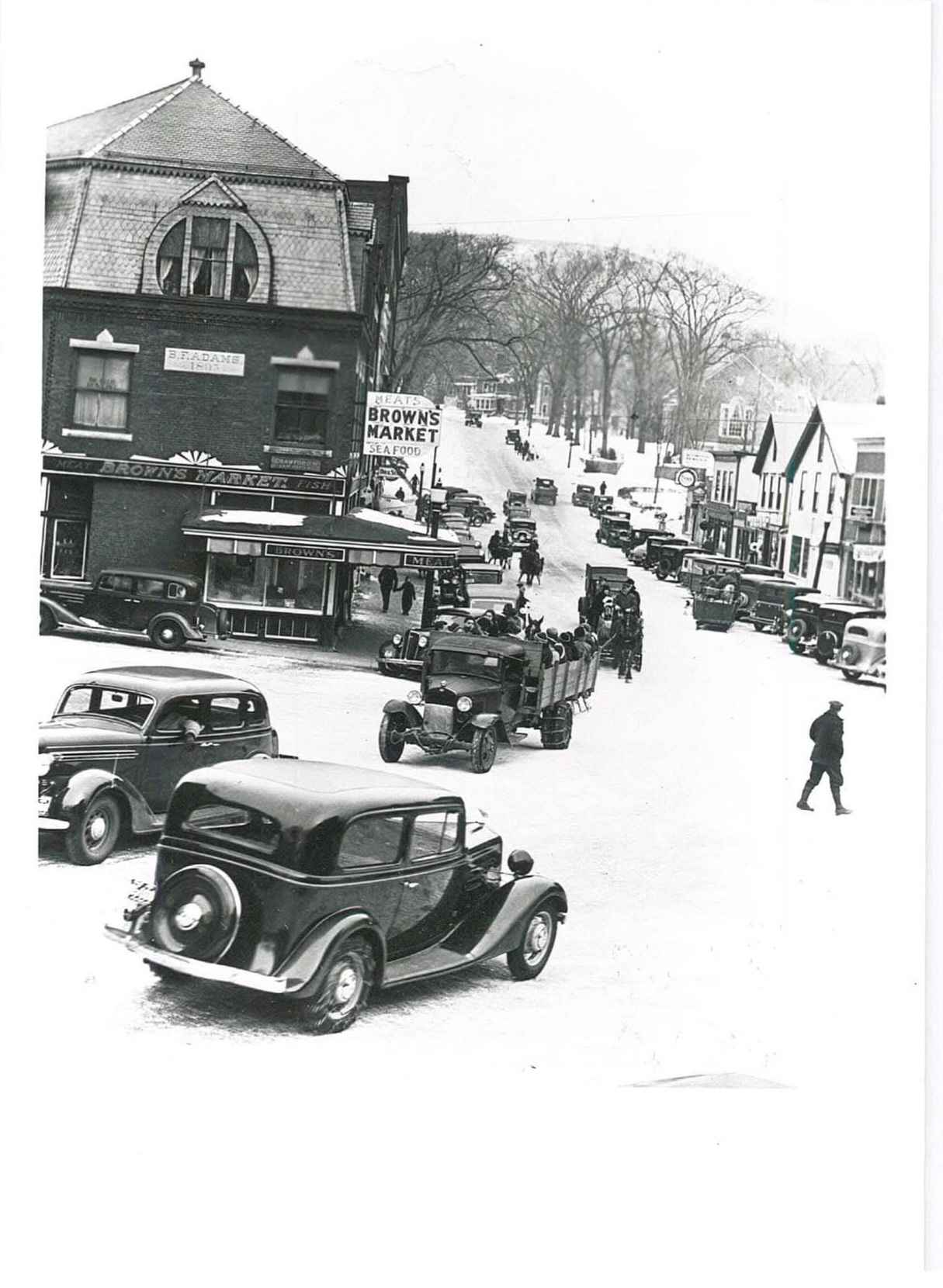
Last in line was the Adams block, which was also built on a larger scale and an ornament to the square. Carleton, Norwood & Co. store had been replaced by a handsome three-story brick block. Curtis store was now a three-story, also of brick, and the first to be constructed after the fire.
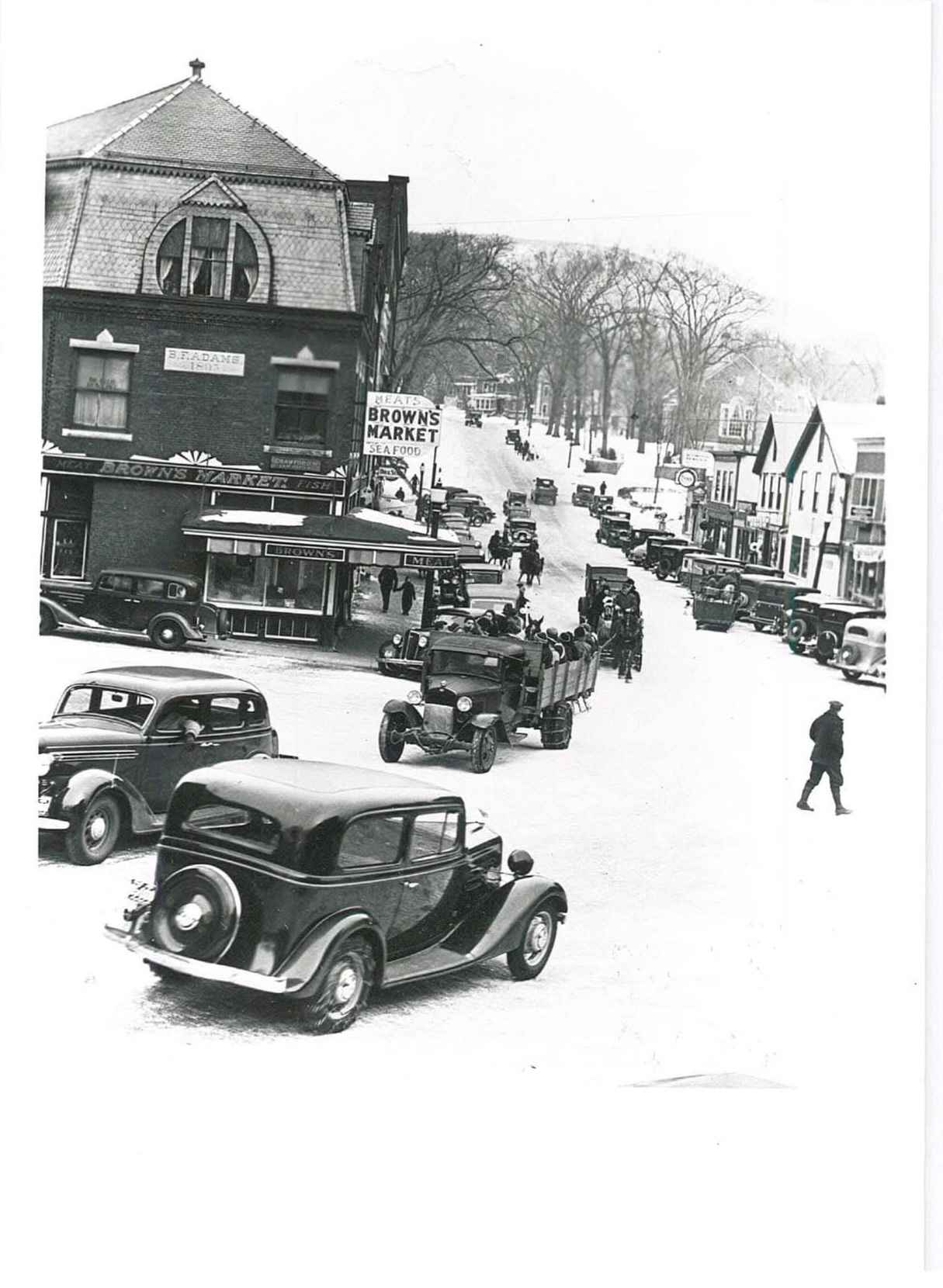
These fine new buildings continue crossing Washington Street where the Camden Village Corporation property was replaced by a 60 x 140 ft. building, three stories high, with a hip roof. It was the tallest building of all the new ones and cost $40,000. The Methodist Church and Chapel on Washington Street (just off Elm Street) was not rebuilt on that location. A Gothic style church was constructed on Mountain Street for about $10,000.
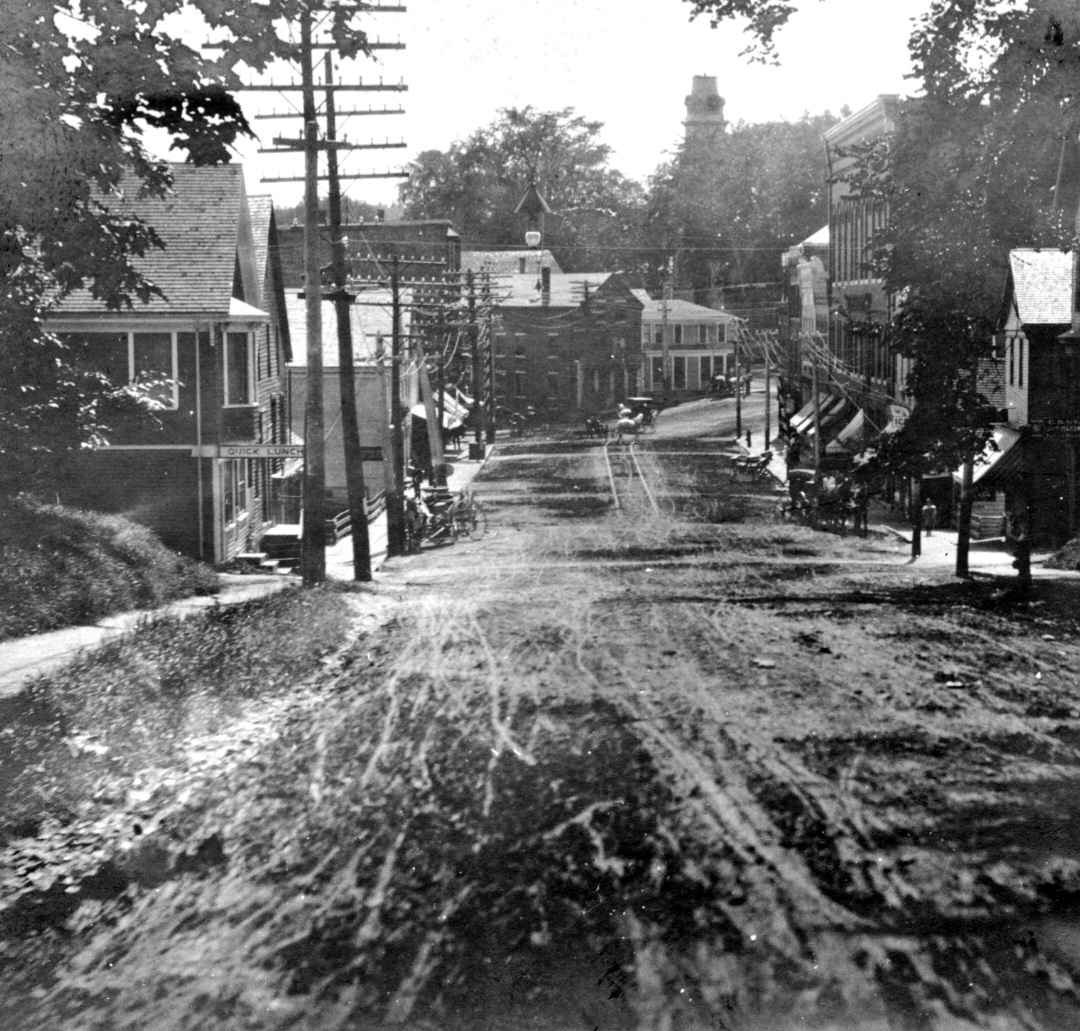
The town built a new clad iron engine house for $2,000 on Washington Street. After the first year with all its new brick buildings, Camden businessmen continued to build. The buildings are still there today in busy Camden, and the name of the block is on many. It was in 1940 that Camden completed its “boulevard” through the center of town, with new sidewalks and an improved lighting system. This stretch of road began on Union Street (by the Catholic Church) and continued thru to “Monument Square” (above the Library). The cost was about $40,336.20. Main Street in Camden before the 1892 fire and with its dirt road was not very attractive.
Camden Historian
Barbara F Dyer
"A generation which ignores history has no past and no future"
SUPPORTDonate Today!
We invite your support to preserve this heritage. Your tax-deductible donation, any amount, directly funds these efforts.
Donate today and help safeguard Camden’s legacy. Together, we keep our history alive.
With gratitude, Camden Great Fire Historic District Nonprofit For Camden’s Past, Present, and Future.